Why your TikTok content still reads like an ad
A casual setup is one thing. What makes the difference is TikTok-native content.
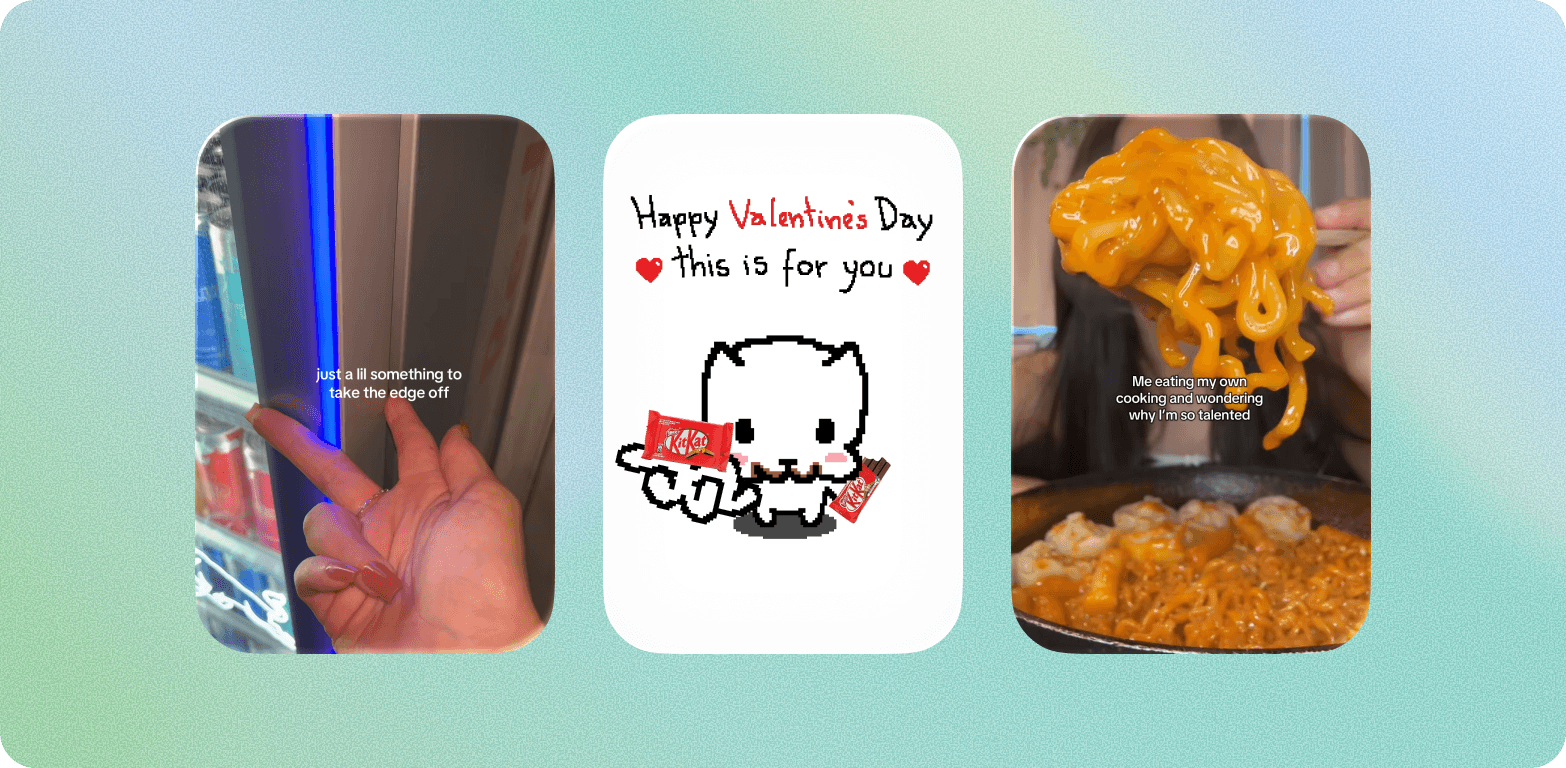
Think about the videos you don't skip on your For You Page (FYP). A real reaction. A joke you recognize. Someone saying the thing out loud that everyone else was thinking.
They don't need to be polished to hold you there.
That's what your TikTok content is actually competing with. Not other ads.
A casual setup is just one part of the picture
So brands do the obvious thing. Shoot on a phone. Kill the studio lights. Leave the awkward pause in.
That genuinely helps, but it's not the whole trick. Lo-fi production is closer to how TikTok actually gets made.
Even if a creator speaks casually from their couch, a product-first pitch is easy to recognize.
What makes the difference is the format
TikTok moves through formats people recognize on sight. A running joke. A shared frustration. A reaction that lands. A small visual payoff.
The content format is what earns the watch. Your product has to find a role inside it.
Here's the test: look at the idea with the brand stripped out. Does the content still give someone a reason to keep watching? If not, the video will probably still read as an ad.
Keep your format loose but clear
So how do you give creators a format without scripting the execution? In a Popow campaign, the guide names the one element a meme format can't lose. It doesn't script the video. The creator decides how it sounds, how it's timed, and how it's delivered, because that's what makes it belong on their channel.
The balance of your format is important. "Just make it feel natural" doesn't give a creator anything to act on. A line-by-line script leaves them no room to make it fit their channel. Be specific about the main meme format, and open about the rest.
Treat variations as input
Different executions can show which part of the format travels, where your product fits, and which choices depend on a specific creator. A variation may also reveal an element worth testing in the next brief.
That gives you two useful inputs:
- The creator decides how it sounds and moves on their channel.
- The variations give you evidence for what to test next.
None of this means hiding the ad
This doesn't mean hiding that content is paid. A video can fit TikTok without hiding that it's commercial.
The FTC expects creators to make material connections to brands clear and to place disclosures where people will actually notice and understand them. Its native advertising guidance is equally clear that content shouldn't mislead people about being commercial.
Native creative and clear disclosure are compatible.
Four questions before you write the brief
- What makes this format worth watching?
- Which element has to stay intact for it to work at all?
- What are you leaving to the creator's own language, timing, and delivery?
- What could the variations teach you about the next one?
Get those four right and you're not asking a creator to make an ad feel natural. You're giving them a clear format boundary, with enough room to make the execution theirs.
See what this looks like for your brand
Wondering how to make your TikTok content fit the platform? We'll walk you through one.
Or just email us at business@popow.ai.